The Indian Gaming Regulatory Act splits Native American gaming into three classes. That split determines whether a flashy cabinet with spinning reels is a bingo game the tribe can run on its own authority, or a slot machine that forces a compact with the state.
We revise a page when the statute, filing or report behind it changes: if the source is not in front of us, the figure does not go up.
What is on this page
The line is not the cabinet. It is what happens inside it.
IGRA draws three lines
Congress wrote the classes into 25 U.S.C. § 2703. Class I covers social games for minimal-value prizes and traditional forms of Indian gaming connected to ceremonies. It is the smallest category and rarely the subject of litigation.
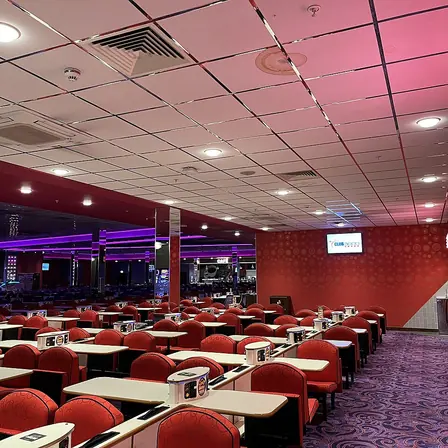
Class II is the one that surprises players. The statute expressly includes “the game commonly known as bingo,” whether or not electronic, computer, or other technologic aids are used. Bingo, under the statute, requires cards bearing numbers, a draw determined either physically or electronically, and a winner who first covers a designated arrangement. In the same location, Class II also catches pull-tabs, lotto, punch boards, tip jars, instant bingo, and “other games similar to bingo.”
Class III is the residue. It means everything not in Class I or Class II. Slot machines land here. So do blackjack, baccarat, chemin de fer, craps, roulette, and electronic or electromechanical facsimiles of any game of chance.
Why Class II stays tribal
The National Indian Gaming Commission puts it plainly: Class II gaming is regulated by the tribe, subject to NIGC oversight, and no tribal-state compact is required. A tribe operating a Class II bingo hall — or an electronic version of one — answers to federal regulators, not to the state capital. The NIGC’s own history page notes that Class II includes non-banked card games played exclusively against other players, another kind of gambling that stays inside tribal jurisdiction without a compact.
Why Class III changes the deal
Class III changes the power structure. Slot machines, casino table games, and electronic facsimiles pull the state into the arrangement. The D.C. Circuit in Diamond Game Enterprises v. Reno described pull-tabs as Class II and said Class III includes all gambling not covered by the first two classes, facsimiles included. The Ninth Circuit made the same logic sharp in U.S. v. Iipay Nation of Santa Ysabel (2018): the contested system was an electronic facsimile of bingo and therefore a Class III game. Once a machine is Class III, a compact is not optional.
The machine test: aid or facsimile
The NIGC’s 2014 classification opinion for Bingo Nation gave the field a practical question. For an electronic device used in a Class II game, the key is whether it is an aid to play or a facsimile of the game. An aid helps players participate in a live bingo session; a facsimile replicates the experience of pulling a slot handle without the underlying bingo game. The Iipay Nation holding drew exactly that line: when the system looks and plays like a slot but lacks the live shared-bingo mechanic, it crosses into Class III.
This distinction means a cabinet can show five reels and fruit symbols but still be telling the player they are holding a bingo card in a networked draw. That is legal Class II. A cabinet that runs an internal random number generator with no real bingo game behind it is a facsimile and Class III.
Who polices the line
Tribes and game developers can ask the NIGC Office of General Counsel for an advisory opinion. The agency’s game-classification page lists opinions that decide whether a particular system is Class II or Class III. The 2014 Bingo Nation opinion is one; many others exist, forming a quiet, technical body of administrative law that casino floor designers study.
What the player actually gets
The difference matters to the person in the seat. A Class II machine that is bingo with an electronic aid can be placed on a tribal floor without a state compact. The house does not bank the wager in the traditional slot sense; the machine connects players into a bingo game with a prize pool determined by the cards in play. The player is legally in a bingo game, not at a slot machine.
If the machine is a facsimile, it is Class III. That classification brings the state in, requires a compact, and often changes what games are available. The cabinet might look the same. The law says it is not.
The boundary remains unresolved at the edges. A machine can mimic a slot exactly, but if federal law treats it as bingo with a technological aid, it stays Class II. A developer who designs a facsimile instead of an aid moves the whole operation into Class III. The cabinet alone tells you nothing.