A sudden spike on an obscure table-tennis match. A torrent of maximum-stake wagers on a fourth-quarter prop in a college basketball game.
We revise a page when the statute, filing or report behind it changes: if the source is not in front of us, the figure does not go up.
What is on this page
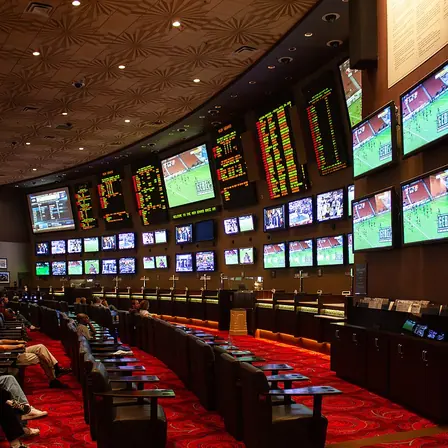
A dozen accounts created minutes earlier, all betting the same obscure outcome. These signals are not themselves proof of anything. They are the start of a document trail that ends, if the facts demand it, with a league suspension, a revoked licence, or a prosecutor’s file. The chain from blip to formal integrity alert runs through a deliberate, layered system of monitoring, cross-checking, and mandatory reporting—and most of it happens before a headline ever appears.
What Makes the Blinkers Go Off
The triggers are granular and automated. Operators and the integrity monitors they are required to retain watch for wager-total spikes that break algorithmic baselines, sudden volume surges on low-liquidity markets, and rapid-fire placement from the same device or IP cluster. Tennessee’s Sports Wagering Council, in written testimony to the U.S. Senate Commerce Committee, listed the flags: “spikes in wager totals, wager volume, unusual geolocation changes, rapid wager placement, newly created accounts that immediately place specific wagers, and large prop bets.” A punter who opens an account and immediately places large bets on niche outcomes is not invisible. The trading screen flickers to life with a risk score, and the review begins. IBIA’s 2025 report notes the group monitored many sports events across multiple sports, issuing numerous suspicious-betting alerts to authorities. Not every anomaly becomes an alert, but every alert began as an anomaly that cleared a human analyst’s desk.
The Monitors in the Middle
The monitoring layer is typically not a government function. It sits inside a cluster of specialist bodies that bookmakers contract or join as members. IBIA, the largest global player, runs a “Global MAP” platform: when a member operator flags something odd, other members are pinged to cross-check their own trading data, analysts review the pattern, and if suspicious betting is identified, a “detailed report is shared with sports bodies, regulators, and law enforcement.” In the United States, the Sports Wagering Integrity Monitoring Association (SWIMA) was launched in 2018 with an explicit multi-state purpose: a member sportsbook can report a suspect wager to a centralised hub, and the alert cascades to regulators across multiple jurisdictions rather than sitting in one state’s inbox. Another company, Integrity Compliance 360, told ESPN in January 2025 that its alert clients include sportsbooks, state gaming regulators, leagues, and NCAA conferences. Michigan’s rules require that an independent integrity monitoring provider share information “with each other” and disseminate reports to all member operators—so the monitoring layer is not merely a reporting tube; it is an information-sharing network.
The Rules That Force the Hand
No operator gets to decide quietly that an alert is not worth a regulator’s time. Michigan Administrative Code R. 432.743 mandates internal controls that identify unusual wagering activity and require prompt reporting to an independent integrity monitor. Tennessee’s testimony confirms that operators must report unusual or suspicious activity to the Sports Wagering Council, either directly or through the monitor. The distinction matters: Michigan’s rule distinguishes between “unusual wagering activity” and “suspicious wagering activity.” When the threshold is crossed, the monitoring provider must immediately notify other monitors, member operators, the board, the appropriate sports governing body, and any other agency the board directs. IBIA’s own Code of Conduct echoes the same duty: member operators “should immediately report potentially fraudulent activity to the relevant authority, including sports governing bodies and gambling regulators.”
The Freeze, the Hold, and the Regulator’s Nod
Once a report lands, the operator gains limited latitude and a firm prohibition. Under both Michigan’s rule and Massachusetts 205 CMR 238.18, a sportsbook may suspend wagering on the related events or wager types immediately. It may also place a hold on the suspicious wagers while it investigates. What it may not do is cancel or void those wagers on its own. Both states require prior approval from the commission or board. That is a hard stop: the operator cannot unilaterally unwind the money, which preserves the financial trail for the regulator and the league. A Michigan Gaming Control Board spokesperson acknowledged to ESPN that the board was aware of an IBIA review into an NCAA basketball game and declined further comment—exactly the sort of confirmation that a live alert was working its way through the system, with no public conclusion yet.
Where the Trail Leads
The alert does not stay in the compliance department. IBIA’s standard process sends the detailed report to sports governing bodies, regulators, and law enforcement. SWIMA’s founding aim, as Reuters reported at launch, was to collaborate with state and tribal gaming regulators, law enforcement, “and other stakeholders.” The recipient list is not academic: it puts the same bundle of timestamps, account fingerprints, and betting patterns in front of a league integrity unit that can suspend an athlete, a regulator that can yank a licence, and a criminal investigator who can subpoena the underlying account data. The Michigan rule specifically instructs the monitor to notify “the appropriate sports governing body,” closing the gap between a surveillance-room screen and a disciplinary hearing.
What the Paperwork Doesn’t Say
The available primary-source rules leave several boxes unchecked. No uniform legal definition cleanly separates “unusual” from “suspicious” wagering activity across multiple states; the triggers are jurisdictional, and the exact numerical thresholds live inside proprietary monitoring algorithms, not in published statutes. The sourced material does not cover offshore and unlicensed markets. And while an alert is treated as grounds for notification and precautionary holds, regulators have not published a standard statement confirming the legal truism that an alert is an evidential starting point, not a finding. The distinction is real, but the primary-source articulation remains thin.
The paperwork that matters is not the alert itself. It is the timestamped, cross-referenced report that lands simultaneously on the desks of a state gaming board, a conference integrity officer, and a law-enforcement liaison. The blip on the screen fades fast; the document trail is what decides the next move.